
We have added (8) training videos in the Certified Thermal Electrician Course from various industry professionals. We have many more planned. It is a complication of the BEST THERMAL IMAGING TRAINING on the planet. And it is getting better all the time. Visit ThermalElectrician.com
Every conductor in an electrical system is governed by one silent master: heat.
Ampacity is not just a table value — it is the thermal survival limit of the insulation system protecting the conductor.
🧠 Understanding Ampacity at the Molecular Level
The ampacity of a conductor represents the maximum current that can flow continuously without exceeding the temperature rating of its insulation. For modern building wire, that insulation is typically:
🔌 THHN / THWN-2 — thermoplastic nylon-coated insulation rated 90°C dry / 90°C wet
🔋 XHHW-2 — cross-linked polyethylene (XLPE) thermoset insulation rated 90°C wet / dry
These ratings assume very specific conditions: correct sizing, proper installation, NEC-compliant adjustment and correction factors, normal ambient temperatures, and intact terminations. When any of those conditions change, thermal stress begins accumulating inside the insulation itself.
🔥 The Hidden Physics of Insulation Degradation
Excess heat causes molecular chain breakdown in both thermoplastic and thermoset materials. In THHN and THWN-2, prolonged thermal exposure leads to hardening, embrittlement, and micro-cracking. In XHHW-2, excessive temperature degrades the cross-linked polymer matrix, reducing dielectric strength and accelerating aging.
The danger is that this degradation is progressive and invisible — right up until failure.
⚠️ Where Thermal Imaging Becomes Mission-Critical
Thermal imaging allows electricians and maintenance teams to observe real-time thermal behavior of conductors and terminations under load. It exposes:
🌡️ Overloaded conductors exceeding expected operating temperature
🔎 High-resistance connections creating localized thermal runaway
⚙️ Uneven phase loading and harmonic heating
🧯 Insulation systems operating near or beyond design limits
🧩 Early-stage failure patterns that no visual inspection can detect
A thermal image becomes a diagnostic fingerprint of insulation health.
🛠️ Protecting Insulation Is Protecting the Entire System
When conductor temperature is controlled, insulation life increases exponentially. Every degree of unnecessary heat accelerates failure. A well-designed thermal maintenance program:
🏗️ Preserves conductor and insulation lifespan
⏱️ Prevents unexpected outages and catastrophic faults
💰 Reduces maintenance and replacement costs
🧑🚒 Eliminates hidden fire hazards before they ignite
For conductors like THHN/THWN-2 and XHHW-2, maintaining operation within their thermal envelope is the difference between a facility that survives decades and one that fails prematurely.
🎯 The Real Bottom Line
Ampacity is the thermal contract between your conductors and your system.
Thermal imaging is the enforcement mechanism that makes sure the contract is never broken.
When you protect the insulation, you protect the conductors, you protect the equipment, and you protect the people.
20% Commissions and affiliates can create unique links to every product we have, except the Certified Thermal Electrician course.

At 11:30 AM ET we are doing a special announcement, and Live Stream on all our social channels. You can watch at YouTube.com/masterthenec
So, for 2026 we have revamped our affiliate program. The commission is 20% on everything, except the Certified Thermal Electrician Program.
We will be adding a new portal page with login and registration links and it is easier than ever before. You can create your own affiliate links to specific courses you want to promote as well.
You can get into education and let us do the educating. New video courses coming soon as well on specific topics.
Check it out now and get registered. However, only if you are serious about promoting it on social media and other outlets so we all grow together.

I hope that this is the right spot to post this and i'm sorry if it is turns out to be just a mess of words so I'm apologizing a head of time. Paul your coffee hour show was part of why I was about to pass my test last month. while i was not able to comment much during the show I listen to you, and later after work or if we had a long lunch hour i would look up what you said. Your show made it so when a coworker would ask a code question I would have an answer or knew where to look for it or how to look it up. I know that if I have a question there is the "ask paul" spot but I have always felt that was for more important questions not basic stuff, like when you are starting out learning about the code. your show did not care weather you where a master or this is your first day as an electrician, that is one reason I thought it was so good. I know that the show was a major time sink for you, and that was why you went to one a week and then killing it, but it was always my favorite way to start the day. I understand why you need to stop the show and I'm trying to guilt trip you back into it but I more want to let you know that the show was special even if did not have huge number of people showing up every day. I have learned long time age that the cheapest knowledge is watching what other do around you. If they make a mistake see what they did and don't do it, if they are doing a good job watch what they do and copy it, and your show was a gold mine of knowledge. you showed me how to use a code book for a test, how limiting and time consuming the index can be, the three wave method. All of this stuff I never heard from any one else. I tried a youtube guy, I bought mike's books and videos, I did not get as much out of them as I did your course and your shows was just that extra stuff that was so hard to find out there. well I think I rambled on long enough, just know that I know that the show was a lot of work but to us that is what made the differences between just being installers and being professionals and I thank you for that. I wrote everything before this on dec 12 and have been sitting on this. I know that there is talk next year of having two shows a month. while I think something is better then nothing, I know for me when you went to once a week it hard to remember that to tune in on that day. when it was everyday it was part of my getting ready for the day every morning. In any case I hope you and your family's had a great Christmas and cant wait to see what is coming for next year.
Electrical failures rarely happen without warning — the warning is heat.
Thermography (thermal imaging) gives electricians the earliest possible insight into what is happening inside energized electrical systems. Heat is not the problem itself; heat is the symptom that reveals high resistance, excessive current, phase imbalance, and component deterioration long before outages, equipment damage, or fire hazards develop.
🔎 What Thermography Reveals in Electrical Panels
A thermal camera measures infrared energy and converts it into a temperature pattern. For electricians, that pattern answers one critical question:
Where is abnormal heat being generated and why?
In the field, thermography consistently exposes loose terminations, overloaded circuits, phase imbalance, deteriorating contacts, stressed conductors, and early equipment failure. When interpreted correctly, these thermal patterns allow corrective action before damage escalates.
🏆 Recommended Camera: TR20 Pro
https://thermalelectrician.com/ourthermalcameras/
The TR20 Pro supports a repeatable diagnostic workflow: scan quickly, isolate hot spots, document findings, and verify repairs with confidence. This consistency is what turns thermography from a gadget into a professional maintenance tool.
🧠 Electrical Physics Behind the Image
Thermal patterns are governed by two fundamental mechanisms:
current flow (I²R losses) and contact resistance.
Load-driven heating produces distributed temperature rise across conductors, breakers, and bus structures.
Resistance-driven heating creates localized hot spots at terminations, splices, lugs, and contacts.
The location and shape of the heat signature determines the corrective action — not just the peak temperature reading. A termination running 25–40°F hotter than comparable terminations under equal load is already in a failure trajectory, and resistance heating accelerates as metal surfaces degrade.
🔥 What Thermography Commonly Finds
Thermal imaging under real operating load consistently uncovers high-resistance connections, overloaded conductors, phase imbalance, deteriorating breaker contacts, and bus interface failures.
Load level matters — light load can hide defects, while normal or peak load reveals true operating conditions.
🧭 Professional Thermal Inspection Workflow
High-quality thermography is built on repeatability.
Start with safety and confirm the system is operating under meaningful load.
Perform a wide scan for context before isolating individual components.
Work top-to-bottom and left-to-right using a consistent scan path.
Compare like-to-like breakers and loads.
Check phase-to-phase for imbalance.
Capture both overview and close-up images.
Document conditions and verify every repair with before-and-after scans.
Repeat on a schedule to establish meaningful trends.
This workflow converts thermography into true preventive maintenance.
🧠 Interpreting Hot Spots (Electrician Logic)
Pinpoint heating at a termination usually indicates high resistance.
Uniform heating along a conductor or breaker typically indicates load stress.
Consistently hotter phases reveal imbalance.
Interface heating at bus or stab points indicates contact degradation.
📊 Case Example — 400A Commercial Service Panel
A 400A panel feeding HVAC equipment showed a 38°F temperature delta between Phase B and Phases A/C at the main lugs and across multiple branch breakers. The uniform pattern across Phase B indicated load-driven imbalance rather than a localized resistance fault. Load redistribution corrected the issue, and post-repair imaging showed all phases within 6°F — significantly reducing thermal stress on feeders and upstream equipment.
📈 Thermal Trending & Preventive Maintenance Engineering
The real value of thermography comes from trending.
Quarterly scans for commercial systems, semi-annual scans for industrial facilities, post-repair verification scans, and seasonal load comparisons allow electricians to identify degradation long before failure. This approach reduces downtime, equipment replacement cost, and safety risk.
🎓 Why Hire a Certified Thermal Electrician™ — or Become One
Owning a thermal camera is only half the solution.
Understanding what the image means electrically is where real value exists.
A Certified Thermal Electrician™ combines thermography principles with electrical engineering knowledge to convert infrared data into accurate diagnoses, correct repairs, verified results, long-term asset protection, and professional documentation that facility managers and safety officers trust.
For electricians, earning this certification transforms thermal imaging from a tool into a premium professional service.
👉 Get Certified at ThermalElectrician.com
https://thermalelectrician.com

Hey Folks. Do you all have any New Year Resolutions? Let’s Hear Em!

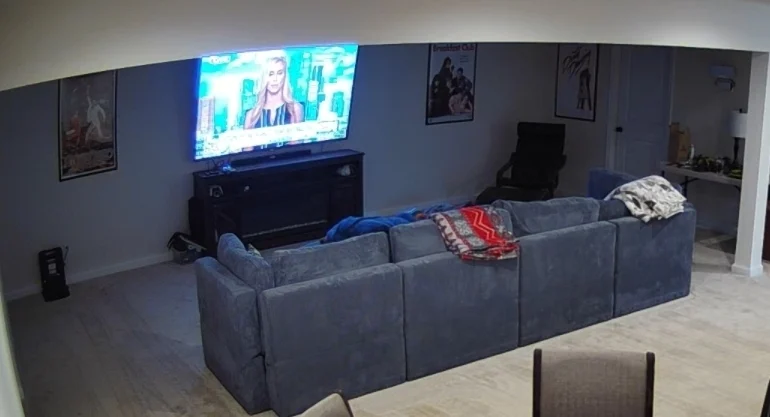
Hey Folks....Are you all movie lovers? Well, im not really but I do have my favorite (3) movies of all time. 1) Saturday Nighr Fever, 2) CaddyShack, and 3) The Breakfast Club. Now, my wife's favorite is also up, Dirty Dancing! Any of these your favorite also?